What’s the Difference Between SEO & SERP? Complete Guide 2026
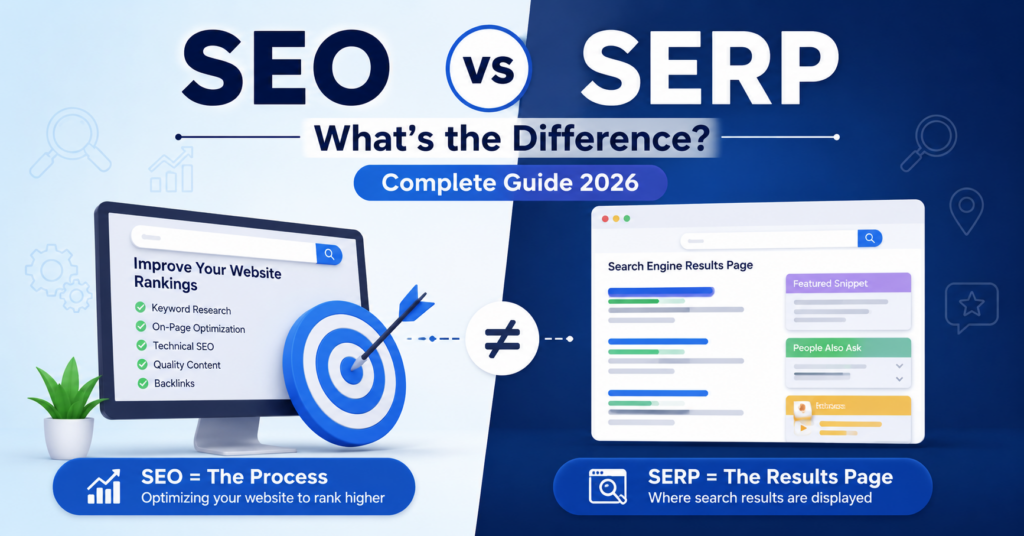
SEO and SERP are two of the most commonly used terms in digital marketing and search engine optimization. Many beginners often confuse SEO with SERP because both terms are directly connected to Google rankings, website traffic, and search visibility. This complete 2026 guide explains the real difference between SEO and SERP, how they work together, and why understanding both is important for improving organic traffic and online growth.
What Is SEO?
SEO stands for Search Engine Optimization. It is the process of improving a website so that it ranks higher in search engines like Google, Bing, and other search platforms. SEO helps websites increase visibility, attract organic traffic, improve user experience, and generate more conversions over time.
Search engine optimization includes multiple techniques such as keyword research, content optimization, technical SEO, backlink building, mobile optimization, Core Web Vitals improvements, and user experience enhancements.
Keyword Optimization
Helps websites target search terms users type into Google.
Technical SEO
Improves crawlability, indexing, speed, and website structure.
Content Strategy
Creates useful content optimized for rankings and engagement.
Authority Building
Improves trust using backlinks and brand credibility signals.
What Is SERP?
SERP stands for Search Engine Results Page. It is the page users see after searching for something on Google or another search engine. SERPs contain organic search results, ads, featured snippets, videos, local packs, image results, shopping listings, and many other search features.
Every time someone searches for a keyword like “best SEO tools” or “how to improve Google rankings,” Google generates a SERP showing the most relevant results based on its ranking algorithms.
Organic Results
Websites ranking naturally through SEO optimization.
Featured Snippets
Highlighted answer boxes shown above regular results.
Paid Ads
Sponsored search listings appearing on top of results.
Knowledge Panels
Information boxes providing quick search answers.
Main Difference Between SEO & SERP
The easiest way to understand the difference is:
- SEO is the process of optimizing a website.
- SERP is the page where search results appear.
SEO helps websites rank better inside SERPs. Without SEO, it becomes difficult for websites to gain visibility on search engine results pages.
| SEO | SERP |
|---|---|
| Means Search Engine Optimization | Means Search Engine Results Page |
| Improves website rankings | Displays search results |
| Includes optimization strategies | Contains rankings, snippets, ads, and features |
| Focuses on traffic growth | Focuses on search result display |
| Used by marketers and SEO experts | Seen by users searching online |
How SEO Helps Websites Rank in SERPs
Google uses hundreds of ranking signals to decide which websites appear higher in SERPs. SEO helps optimize these ranking factors so search engines understand website quality, relevance, and trustworthiness.
Keyword Research
Keyword research identifies the phrases users search online. Websites targeting high-quality keywords improve their chances of ranking on search engine results pages.
Content Optimization
SEO content optimization improves headings, readability, keyword placement, internal links, and user engagement metrics.
Technical Improvements
Technical SEO helps websites load faster, work on mobile devices, and become easier for search engines to crawl and index.
Backlink Authority
Backlinks from trusted websites improve authority signals and help pages rank higher inside SERPs.
| SEO Strategy | Purpose | SERP Impact | Result |
|---|---|---|---|
| Keyword Optimization | Target search intent | Improves relevance | Higher rankings |
| Technical SEO | Improve performance | Better crawlability | Faster indexing |
| Link Building | Increase authority | Boost trust signals | Stronger rankings |
| UX Optimization | Improve engagement | Lower bounce rate | Better visibility |
Types of SERP Features in 2026
Modern SERPs are much more advanced than traditional blue links. Google now includes interactive search features designed to improve user experience and provide faster answers.
Featured Snippets
Featured snippets appear at the top of search results and answer user questions directly.
People Also Ask
This section displays related questions users commonly search for.
Video Results
YouTube videos and tutorials often appear for educational keywords.
Image Packs
Google displays image galleries for visual search intent keywords.
Local Packs
Businesses targeting local SEO can appear in Google Maps-based search results.
Featured Snippets
Improve visibility above normal organic results.
Video Rankings
Boost engagement through video search visibility.
Image SEO
Generate traffic through optimized images.
Local Search
Increase visibility for nearby business searches.
Why Understanding SEO & SERP Matters
Understanding both SEO and SERP helps businesses improve digital marketing strategies. Many website owners focus only on publishing content without understanding how SERPs actually work.
When marketers understand SERP behavior, they can optimize content for:
- Featured snippets
- Higher click-through rates
- Search intent matching
- Rich results
- Mobile-first indexing
- Voice search optimization
Modern SEO in 2026 requires understanding not just rankings, but also how search engines visually present results to users.
SEO vs SERP for Beginners
For beginners entering digital marketing, SEO and SERP can feel confusing initially. A simple example makes understanding easier.
If you own a blog about fitness:
- You use SEO to optimize articles for keywords like “best home workouts.”
- Google then displays your page inside SERPs when users search for that keyword.
In simple words:
- SEO is the strategy.
- SERP is the result page.
| Beginner SEO Concept | Explanation |
|---|---|
| Keyword Research | Finding what users search online |
| On-Page SEO | Optimizing website content |
| SERP Rankings | Position in Google results |
| CTR Optimization | Improving click-through rates |
| Search Intent | Understanding user goals |
Common SEO & SERP Mistakes
Ignoring Search Intent
Publishing content without matching user intent reduces ranking opportunities.
Keyword Stuffing
Overusing keywords creates poor readability and weak user experience.
Poor Meta Titles
Weak titles reduce CTR even when rankings are strong.
Ignoring Mobile Optimization
Mobile usability directly impacts modern SEO performance.
Slow Website Speed
Slow-loading pages negatively affect rankings and user engagement.
Optimize Speed
Faster websites improve user experience and SEO.
Improve Titles
Better titles increase click-through rates.
Match Intent
Create content users actually want.
Enhance Mobile UX
Mobile-friendly websites rank better in Google.
Future of SEO & SERP in 2026
Search engines continue evolving rapidly with AI-generated answers, voice search, personalization, and interactive SERP features becoming more common.
Modern SEO strategies now focus on:
- Helpful human-written content
- Experience and expertise signals
- Core Web Vitals optimization
- Semantic search relevance
- Visual and video search optimization
- AI-enhanced search experiences
Understanding SERP trends helps marketers prepare for future ranking opportunities and changing search behavior.
Frequently Asked Questions
What is the full form of SEO?
SEO stands for Search Engine Optimization.
What is the full form of SERP?
SERP stands for Search Engine Results Page.
What is the main difference between SEO and SERP?
SEO is the optimization process, while SERP is the page displaying search results.
Can SEO improve SERP rankings?
Yes, strong SEO strategies help websites rank higher inside SERPs.
Why are SERP features important?
SERP features increase visibility, engagement, and click-through rates.
Is SEO important in 2026?
Yes, SEO remains one of the most important digital marketing strategies for organic growth.
Final Thoughts
SEO and SERP are closely connected but completely different concepts. SEO focuses on improving website visibility through optimization techniques, while SERP represents the actual search results displayed to users. Businesses, bloggers, marketers, and website owners who understand both concepts can create stronger digital marketing strategies, improve search rankings, and attract more organic traffic in 2026.
As search engines continue evolving, understanding SERP behavior and implementing modern SEO best practices will remain essential for long-term online growth and visibility.